Small Bathroom Renovation Cost (2026 Guide)
- marketing149029
- 3 days ago
- 4 min read
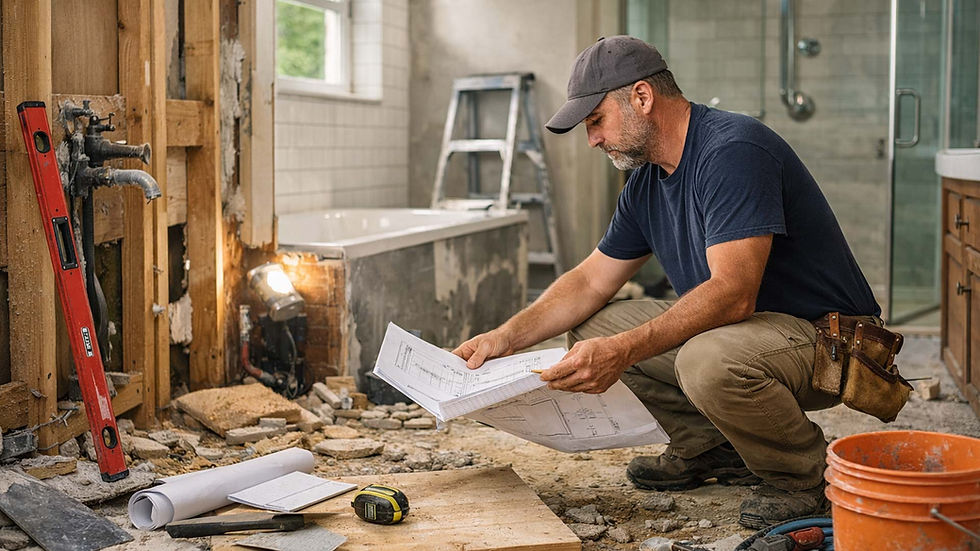
Let’s Be Honest—Bathroom Renovations Are Never “Cheap”
People often assume a small bathroom means a small budget. It sounds logical… but it rarely plays out that way.
Even in 2026, when materials and design options are more accessible than ever, bathrooms still sit in that awkward category where “small space” doesn’t equal “small cost.” In fact, per square metre, they’re usually one of the most expensive rooms in the house.
I’ve seen compact bathrooms come in under $8,000, and I’ve also seen nearly identical spaces push past $20,000. The difference usually isn’t size—it’s decisions made along the way.
So What’s the Real Cost in 2026?
If you want a realistic range (not marketing fluff), here’s what most homeowners are actually spending:
Light refresh (cosmetic update): $5,000 – $9,000
Standard full renovation: $9,000 – $16,000
Higher-end finish: $16,000 – $25,000+
But here’s the part people don’t always hear upfront—those numbers assume things go smoothly. No hidden water damage. No last-minute design changes. No plumbing surprises behind the walls.
And let’s be real… that’s not always how it goes.
Where the Money Actually Goes (And Where People Get Surprised)
Demolition—Simple, but Not Always Predictable
Tearing out an old bathroom seems straightforward. And most of the time, it is.
But occasionally, once tiles come off, you’ll find issues that were quietly sitting there for years—old leaks, weak plaster, or outdated pipework.
💰 Typical range: $300 – $1,500
It’s usually not expensive… until it reveals something underneath.
Plumbing & Electrical—The Real Budget Driver
This is where costs start to separate quickly.
If you keep everything in the same position, you’re generally fine. But once you move a toilet or redesign the shower layout, costs climb fast.
💰 Typical range: $1,500 – $5,000+
And in suburbs like Bathroom Renovation Frenchs Forest, where older homes are common, plumbing upgrades are often unavoidable once work begins.
Waterproofing, Tiles & That “Invisible Work” Nobody Talks About
This part doesn’t look exciting, but it’s what keeps your bathroom from becoming a long-term problem.
Good waterproofing isn’t optional—it’s essential. Tiles, grout, and prep work all sit on top of that foundation.
💰 Typical range: $2,000 – $6,000
People often spend too much time picking tiles and not enough time thinking about what sits behind them.
Fixtures—Where Personal Taste Starts to Show
This is where budgets start to drift up or down depending on lifestyle choices.
A basic vanity and standard fittings will keep things controlled. But once you start looking at designer tapware, frameless glass, or premium finishes, costs rise quickly.
💰 Typical range: $1,000 – $7,000+
It’s not wrong to upgrade here—it just needs to be intentional, not accidental.
Labour—The Cost People Underestimate the Most
If there’s one consistent pattern in renovations, it’s this: people underestimate labour.
Good trades aren’t just installing things—they’re preventing problems you don’t see yet.
💰 Usually takes up 40–60% of total cost
Cheap labour can look appealing on paper. But bathroom mistakes tend to show up months later, not immediately.
Why Small Bathrooms Still End Up Expensive
This confuses a lot of homeowners.
“Small” doesn’t remove the core work. You still need plumbing, waterproofing, tiling, electrical, and finishing. The only thing that scales down is quantity—not complexity.
That’s why two bathrooms that look similar in size can have completely different final costs.
The Real Factors That Change Your Final Price
Forget generic lists—these are the actual cost drivers:
Whether plumbing is moved or left alone
Age of the home (older homes hide surprises)
Tile and fixture choices
How many custom changes happen mid-project
Local labour rates and availability
In areas like Frenchs Forest, I’ve noticed homeowners often start with a clear budget but adjust once demolition reveals what’s behind the walls. That’s more common than people expect.
Budget Advice That Actually Makes a Difference
Most “save money” advice online is obvious. So here’s what actually helps in real projects:
Keep your original layout unless there’s a strong reason to change it
Spend on waterproofing and plumbing first—always
Mix feature tiles instead of tiling everything premium
Make all design decisions before work starts (this matters more than people think)
The biggest budget blowouts don’t come from materials—they come from changes halfway through.
The Hidden Costs Nobody Warns You About
Every renovation has them. It’s just a question of how many:
Water damage behind old walls
Rotting timber under old floors
Updated compliance requirements
Delays waiting for materials
Small structural fixes that weren’t visible at first
A sensible buffer is usually 10–15% extra, and in older homes, sometimes more.
2026 Design Trends (That Quietly Affect Cost)
Trends don’t just change style—they influence budgets too.
Right now, the most common upgrades include:
Walk-in showers replacing bathtubs
Floating vanities for space efficiency
Matte black or brushed metal fittings
Soft, natural colour palettes
Smart mirrors and lighting
Some of these are cost-neutral. Others slowly push budgets up without people noticing.
DIY vs Hiring a Professional—A Realistic Take
DIY sounds attractive until plumbing or waterproofing enters the picture.
You can safely DIY things like:
Painting
Minor fixture swaps
Small cosmetic updates
But once water systems, waterproofing, or electrical work are involved, mistakes become expensive quickly.
Most homeowners end up hiring professionals for the core work anyway—and honestly, that’s usually the safer route.
Conclusion
A small bathroom renovation in 2026 isn’t just a “home upgrade.” It’s a combination of planning, trade work, material decisions, and timing.
Most people will land somewhere between $9,000 and $16,000, but the real success isn’t hitting the lowest number—it’s avoiding surprises halfway through.
If there’s one takeaway, it’s this:A well-planned bathroom is almost always cheaper than a “cheap” one that goes wrong.
FAQs
What is the average small bathroom renovation cost in 2026?
Most homeowners spend between $9,000 and $16,000 for a standard renovation.
What causes bathroom renovation costs to increase?
Mainly plumbing changes, hidden damage, and mid-project design changes.
Is it possible to renovate a bathroom on a tight budget?
Yes—but only if you keep the layout and control material choices carefully.
How long does it usually take?
Most small bathrooms take 1–3 weeks depending on complexity.
Does location matter for cost?
Yes. Areas like Frenchs Forest can vary due to labour rates and housing age.


Comments